Is the Fitbit Air HSA/FSA Eligible? (2026 Guide)
Google's new Fitbit Air launched at $99.99 on May 7, 2026. Like every fitness tracker, it needs a Letter of Medical Necessity to be reimbursed from your FSA or HSA. Here's the exact process, the IRS rule that drives it, and the plan administrator quirks worth knowing.
7 minute read
Hi, I'm Grayson. I run GTM at Burst, which means I talk to FSA and HSA shoppers every day. Google announced the Fitbit Air on May 7, 2026, and within 48 hours we had requests come in from shoppers asking whether their HSA or FSA can cover the $99.99 price. The short version is yes, with one piece of paperwork.
Short answer. The Fitbit Air is not automatically FSA or HSA eligible at checkout the way a thermometer or a bandage is, because fitness trackers fall into the dual-use category under IRS Publication 502. With a Letter of Medical Necessity (LMN) from a licensed provider, the $99.99 device price (or $129.99 for the Stephen Curry Special Edition) can be paid with HSA or FSA pre-tax dollars or submitted for reimbursement. The IRS rules that govern this are IRS Notice 2006-69 and IRS Notice 2007-2, which set the substantiation standard for non-prescription health expenses. Your plan administrator, whether that is Optum, HealthEquity, Fidelity, HSA Bank, PayFlex, Navia, WEX, or FSAFEDS, will accept a valid LMN as documentation. Per IRS guidelines, the LMN must be dated on or after the purchase date. The rest of this guide walks through how to handle each piece.
If you already know a tracker is the missing piece of your sleep or recovery routine, you can start a Burst LMN request below. It takes about three minutes.
What the Fitbit Air actually is, and why eligibility is a question
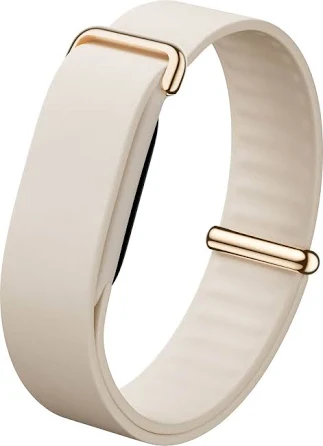
Google launched the Fitbit Air on May 7, 2026, with on-shelf availability starting May 26, 2026. It is a screenless, subscription-free wearable with a detachable pebble module that swaps into a Performance Loop, Active Band, or Elevated Modern Band. The device tracks heart rate, SpO2, heart rate variability, sleep, and daily activity, with up to seven days of battery life and a five-minute quick charge that delivers a full day of use.
The eligibility question exists because the IRS classifies general-purpose fitness trackers as personal-use items by default. Personal-use items are not reimbursable. A wearable becomes reimbursable when a licensed provider documents that you are buying it to manage or treat a specific medical condition. That is the entire job of a Letter of Medical Necessity.
The IRS rule that decides whether a fitness tracker counts
IRS Publication 502 lists qualified medical expenses, and the Treasury Department's Notice 2006-69 and Notice 2007-2 set the substantiation framework for FSA and HSA spending. A fitness tracker is what tax practitioners call a "dual-use" item: useful for everyday life and potentially useful for managing a medical condition. The LMN is what flips it from personal to medical for tax purposes.
The LMN must include three things to satisfy plan administrators:
The medical condition or health concern the device is being used to manage.
Why this specific device or category is recommended for that condition.
The date the recommendation is being made, which must be on or after the date you purchased the Fitbit Air.
Per IRS guidelines, the LMN must be dated on or after the purchase date. We see this trip up shoppers more than any other rule, so we put the timing question first in the Burst intake form.
What an LMN does and how Burst handles it
Burst is a Letter of Medical Necessity service. You tell us what you bought (in this case, the Fitbit Air), why you bought it, and a few details about your health context. A licensed provider reviews the request and, if appropriate, issues an LMN you can submit to your plan administrator for reimbursement. The Burst LMN fee is $25 and is itself an FSA and HSA eligible expense.
We have reviewed thousands of LMN requests for wearables, and the most common pattern is shoppers who are tracking sleep for insomnia, heart rate variability for cardiovascular monitoring, or activity for a weight management goal. None of those require a formal diagnosis to be considered for an LMN. They are common reasons people get an LMN.
For more on how this works across the wearable category, see our 2026 guide to HSA-eligible wearables.
Plan administrator quirks: what Optum, HealthEquity, and Fidelity want to see
Every plan administrator accepts a valid LMN, but the submission interfaces differ in small ways that matter when you are trying to get reimbursed quickly. The Burst LMN is built to satisfy all of the major ones (Optum, HealthEquity, Fidelity, HSA Bank, PayFlex, Navia, WEX, FSAFEDS, Bank of America), and we format the document to match what their reviewers expect.
Optum generally requires the LMN as a PDF upload attached to a claim, with the original purchase receipt as a separate file.
HealthEquity accepts photos or scans uploaded through its app and is usually the fastest to clear an LMN-backed claim.
Fidelity processes HSA reimbursements through NetBenefits and accepts LMN PDFs as supporting documentation.
HSA Bank and PayFlex have similar PDF-upload flows; both have started auto-approving repeat-category claims when an LMN is on file.
FSAFEDS (federal employees) requires the LMN plus an itemized receipt that shows the merchant, date, and dollar amount.
If your administrator is not on this list, ask their support team for "LMN-backed claim submission instructions." Every administrator has them.
What the Fitbit Air competes with, and how that affects eligibility
The Fitbit Air sits in a category that includes the Whoop, the Oura Ring, the Apple Watch, and Garmin trackers. From an FSA and HSA standpoint, all of these are treated the same way: dual-use items that need an LMN to be reimbursable. Price differences do not change the rule, only the dollar amount you can claim.
For context on adjacent devices, we have separate guides for the Whoop, the Apple Watch, and Garmin. The eligibility logic in each is the same, only the device specifics differ.
A note on subscriptions. Whoop's model includes a membership fee. The Fitbit Air does not require a subscription, though it ships with a three-month trial of Google Health Premium. The trial is not a reimbursable expense by itself, but the device price is, with an LMN.
How to submit your Fitbit Air for FSA or HSA reimbursement
The flow is the same whether you buy the Fitbit Air at $99.99 or the Stephen Curry Special Edition at $129.99. Pay with any card at checkout. Then submit the reimbursement claim with the LMN attached.
Buy the Fitbit Air using any payment method. You do not need to pay with an HSA or FSA card at the time of purchase.
Save the order confirmation or receipt. It needs to show the merchant, the date, and the dollar amount.
Request an LMN from Burst. We will ask about the condition or health goal you are tracking, the device, and the purchase date. The LMN comes back within one business day.
Submit the LMN and receipt to your plan administrator through their claim portal. Reimbursement typically lands in 3 to 10 business days.
If you have not yet purchased the device, you can request the LMN first; just make sure the purchase date is on or after the LMN date. For more detail on the document itself, see our guide on what an LMN is and what it should say.
Common reasons people request an LMN for a fitness tracker
These are the reasons we see most often in Burst requests for wearables. They are not the only valid reasons; they are the most common.
Tracking sleep quality for chronic insomnia or shift-work sleep disruption.
Monitoring heart rate variability and resting heart rate for cardiovascular health.
Logging daily activity to support a weight management goal.
Tracking SpO2 trends, which can be relevant for sleep-related breathing concerns.
Monitoring stress and recovery for anxiety management.
What matters is that the device is being used to manage a real health concern, not as a general lifestyle accessory. The licensed provider reviewing the LMN request is the one making that call.
Fitbit Air FSA/HSA FAQ
Is the Fitbit Air automatically HSA or FSA eligible?
No. Like every other fitness tracker, the Fitbit Air is a dual-use item and needs an LMN to be reimbursable.
How much of the device cost can I claim?
The full purchase price, $99.99 for the standard Fitbit Air or $129.99 for the Stephen Curry Special Edition, can be claimed with a valid LMN, subject to your account balance.
Can I get an LMN for a past purchase?
No. Per IRS guidelines, the LMN must be dated on or after the purchase date. This rule applies to every LMN provider, not just Burst.
Is the LMN fee itself FSA/HSA eligible?
Yes. The $25 Burst LMN fee is a qualified medical expense under IRS Publication 502 and can be reimbursed alongside the device.
Do I need a diagnosis to get an LMN for the Fitbit Air?
No formal diagnosis is required. The provider reviews your situation and decides whether the device is being used to manage a medical condition. Common reasons include sleep issues, cardiovascular monitoring, and weight management.
Will my HSA card work at the Google Store checkout?
Generally no. The Google Store is not registered as an IIAS or SIGIS health merchant, so an HSA or FSA debit card swipe will usually fail. The clean path is to pay with any card and file for reimbursement with the LMN attached.
What is the 2026 HSA contribution limit?
$4,300 for single coverage and $8,550 for family coverage in 2026. The FSA contribution limit is $3,300.
Stop paying out-of-pocket for your fitness tracker
If you have a Fitbit Air on the way (or are about to order one), get the LMN in place so the $99.99 comes back into your account instead of disappearing into your post-tax spending.
If you're not sure whether your situation fits, hit reply on any Burst email or write to support@getburst.com. We read every email ourselves.
Thanks,
Grayson
Chief of Staff at Burst
For the underlying rules, see IRS Publication 502, IRS Notice 2006-69, and IRS Notice 2007-2.
Last updated: May 2026
This guide is not medical advice. Your eligibility depends on your specific situation and your plan administrator's interpretation of IRS rules. Burst's clinicians make eligibility decisions on a case-by-case basis.
More in
